
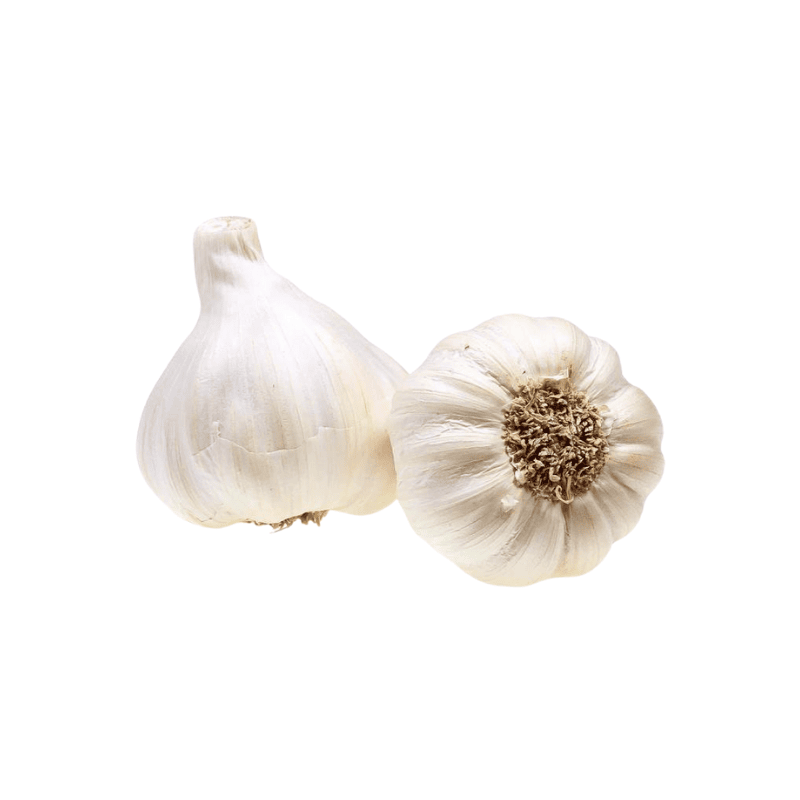
Garlic, scientifically known as Allium sativum, is a species in the onion genus, Allium. Native to Central Asia, garlic has been cultivated for thousands of years for its culinary and medicinal attributes. It is characterized by its bulbous shape, composed of individual cloves encased in a papery skin. Renowned for its distinctive flavor and aromatic intensity, garlic is a cornerstone of diverse cuisines globally, from Italian and Mediterranean to Asian and beyond.
Ingredients:
- Fresh garlic bulbs
How to Use:
- Raw: Finely mince or crush garlic cloves and add them to dressings, dips, or salsas for a potent flavor boost.
- Roasted: Wrap whole garlic bulbs in foil, drizzle with olive oil, and roast until cloves are soft and caramelized. Squeeze out the roasted garlic to spread on bread or incorporate into mashed potatoes.
- Sautéed: Slice garlic cloves and sauté in olive oil until golden brown to infuse dishes with a rich, savory essence.
- In Soups and Stews: Add minced or sliced garlic to soups, stews, and broths for depth of flavor.
- As a Seasoning: Incorporate garlic powder or granules into spice blends for seasoning meats, vegetables, or roasted nuts.
- Pickled: Preserve garlic cloves in vinegar or brine for a tangy and versatile condiment.
- In Pasta Dishes: Sauté minced garlic in olive oil and toss with pasta, fresh herbs, and Parmesan cheese for a simple yet satisfying meal.
- In Marinades: Crush garlic cloves and combine with herbs, spices, and citrus juices to create flavorful marinades for meats, poultry, or tofu.
- As a Garnish: Finely chop raw garlic and sprinkle over dishes like bruschetta, grilled vegetables, or salads for a punch of flavor.
Whether raw, roasted, or sautéed, garlic elevates dishes with its robust taste and aromatic essence, making it an essential ingredient in any culinary repertoire. Its numerous health benefits, including antioxidant properties and potential immune-boosting effects, further underscore its significance beyond the kitchen.


Reviews
There are no reviews yet.